By Dilpreet Sahota, Founder and CEO, Trek Health · September 29, 2026
50,000+ users have come to OpenPayer. But the most interesting thing we’re learning isn’t how many people showed up. It’s what they need help working through.
A user describes a claim denied as bundled even though a modifier was already included. Another asks how to get physical therapy authorization when the delegated portal won’t accept the request. Someone else wants the written policy behind a restriction.
These are anonymized examples from questions people have brought to OpenPayer AI. They aren’t simply requests to find a document. They reveal the work that remains after someone finds one.
Which rule applies to this situation? What evidence supports that interpretation? What should our team check next?
Provider teams are doing the translation work that better software should help them do.
The details are the question
One question asks whether a psychiatrist and a psychologist can see the same patient on the same day under a particular insurer. Another asks whether a regional plan uses ASA or CMS base units for anesthesia reimbursement.
A broad explanation of behavioral health coverage or anesthesia billing would miss the point. The person asking needs an answer that preserves the details of the situation.
That is an important lesson from reviewing these questions. The payer product, state, provider type, service, and setting are not extra context to strip away in pursuit of a simpler answer. They can be the very things the team needs to resolve.
The questions also reveal a distinction between an answer that sounds plausible and an answer someone can use. A request for the written policy behind a rejection is a request for evidence: something to review, share with a colleague, or bring into a payer conversation.
Finding the document is a start. The harder job is establishing what it supports and what it leaves unanswered.
Introducing Trek’s enterprise Policy Agents
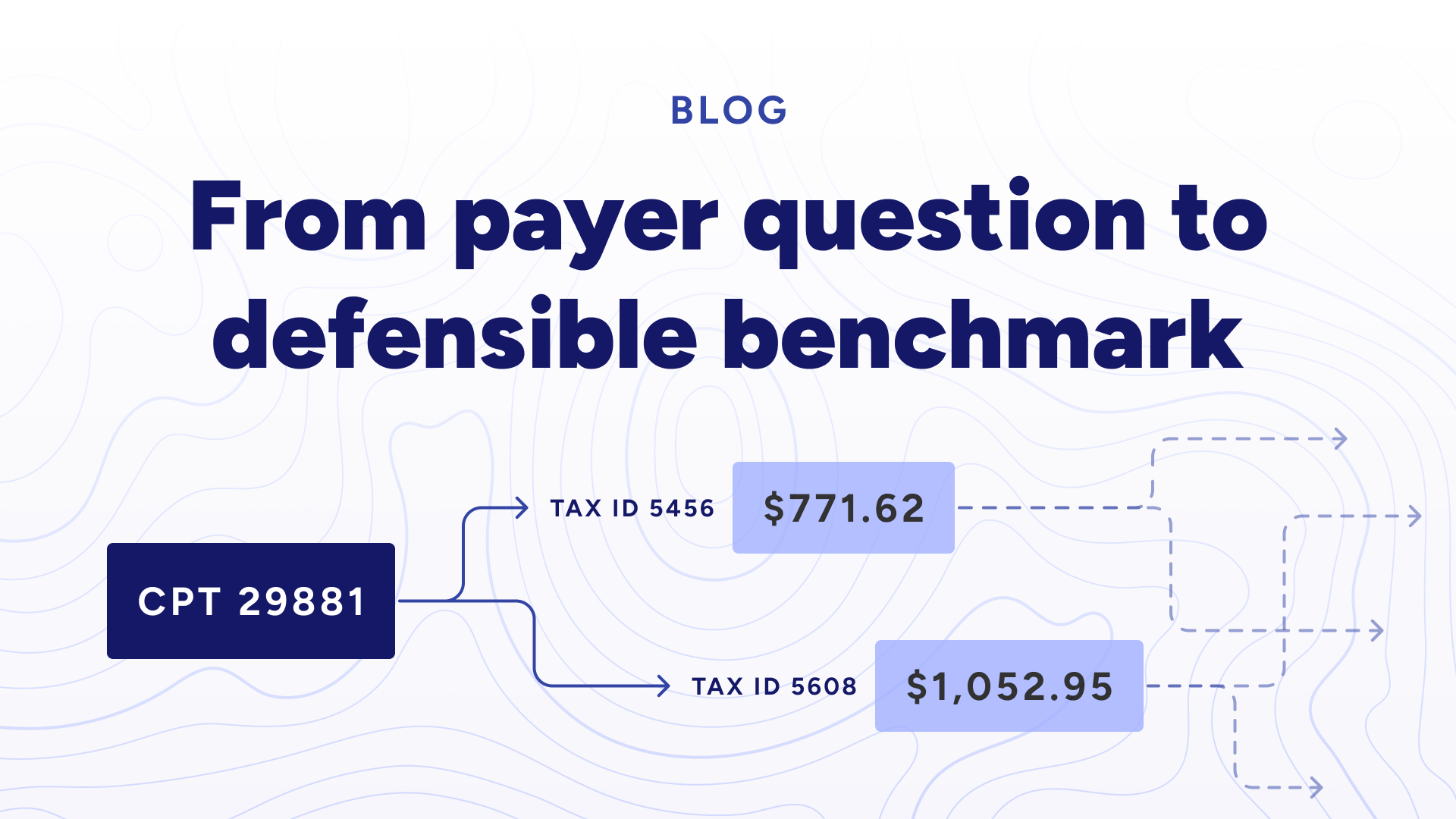
In our recent Market Intelligence article, we described the work between a rate lookup and a defensible benchmark: resolving provider relationships, choosing comparable rates, and investigating unexpected results. Policy research has its own version of that work.
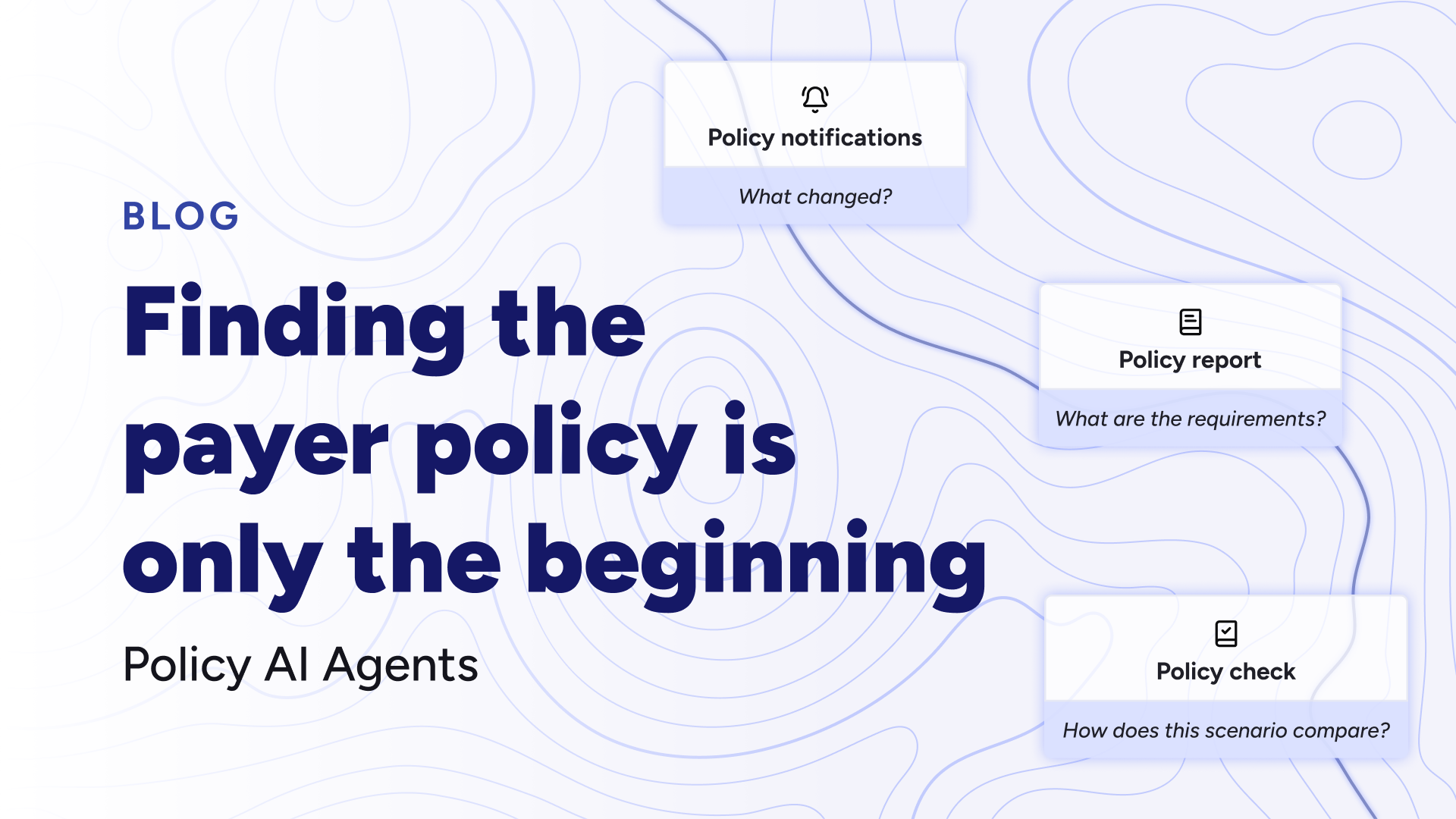
That is the idea behind the Policy Agents in Trek Health’s enterprise platform. The collection focuses on three related jobs: staying aware of policy changes, bringing requirements into a structured report, and checking a specific scenario against current policy (Trek’s Policy Agents).
The questions coming into OpenPayer help make the need for those jobs concrete. They also give us a useful standard for what a good answer should deliver.
Policy notifications: What changed?
Policy research is not always about understanding today’s rule. Sometimes the question is whether something has changed and when a team needs to respond.
In one OpenPayer question, concern about anticipated speech-therapy coding changes immediately became a question about when clinics could renegotiate contracts. That question does not verify the anticipated change, but it illustrates how quickly a research task can become an operational or contracting decision.
Our Policy notifications agent monitors payer policies and notifies teams when meaningful changes occur (Trek’s agent catalog). The purpose is to help teams stay aware rather than depend entirely on someone remembering to look again.
An alert is not the same as an impact analysis. The next step is to establish whether the change applies to the organization’s services and what additional information is needed to evaluate it.
Policy report: What are the requirements?
Some questions require more than one paragraph from one document. A team may need a structured view of the requirements associated with a service line, procedure, or condition.
Our Policy report agent generates structured payer-policy reports around those subjects (Trek’s agent catalog). The value we want that work to deliver is not simply a shorter version of the source material. It is a clearer basis for review.
The OpenPayer questions make the standard tangible. Can the team see which requirements are relevant? Can someone trace a conclusion back to the written policy? Is it clear when a document does not resolve the exact question?
A useful report should make those distinctions easier to examine, not hide them behind a confident summary. The reader should know what the evidence says before deciding what it means for the organization.
Policy check: How does this scenario compare?
The third job starts with a particular situation rather than a general research topic. A team wants to examine a claim or reimbursement scenario in relation to the payer’s rules.
Our Policy check agent checks those scenarios against current payer policy to help identify coverage risk (Trek’s agent catalog). That is decision support, not a payer’s authorization or a guarantee of payment.
Consider the question about a denial despite an included modifier. A useful investigation should not assume the modifier settles the issue. It should examine the relevant policy evidence, identify what is known about the scenario, and make any missing information visible.
That is the standard to hold: do not manufacture certainty where the available evidence stops. Help the team understand what to investigate next.
Why this belongs in payer performance
One of the most revealing patterns in the questions is how readily people move between coverage, coding, reimbursement, and contracting. They are not necessarily thinking in separate product categories. They are trying to work through a decision.
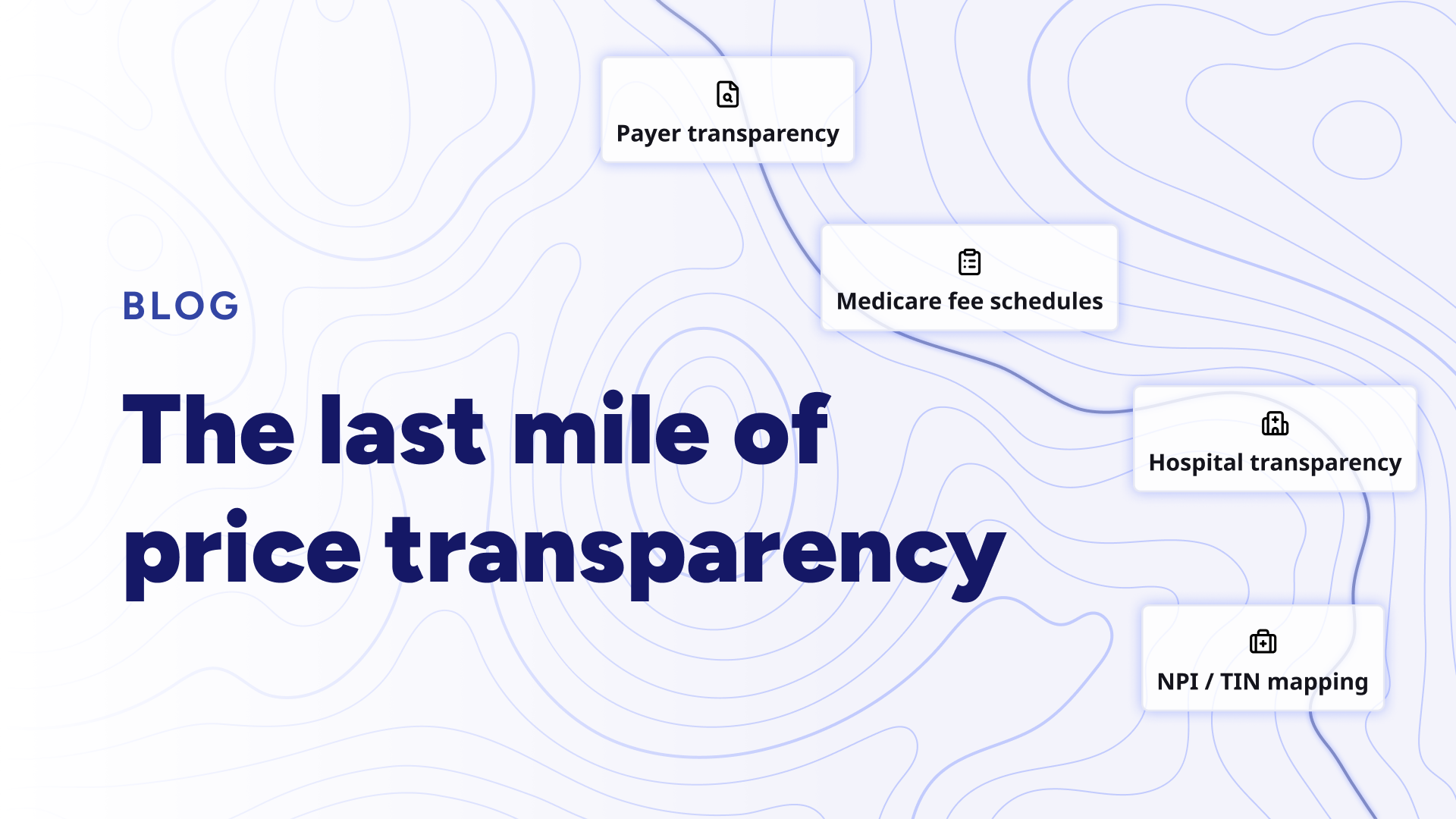
That is why we think policy intelligence belongs alongside market, contract, and revenue workflows. A policy finding can raise a question for billing, authorization, operations, or managed care. Determining its financial significance may then require the organization’s actual agreement, service mix, or claims.
The important distinction is between connecting those questions and pretending one source answers all of them. A public policy does not establish an executed contract term, and a coverage rule does not establish what happened on a particular remit.
Our ambition is to make those connections easier to investigate while keeping the evidence and boundaries visible.
More capacity to act
What makes the OpenPayer questions encouraging is their specificity. They show concrete needs to build around: understanding an exception, finding written support, checking applicability, or recognizing a change that deserves attention.
The opportunity is not simply to give teams another place to search. It is to take on more of the work between a payer question and a next step they can defend.
Bring us one payer, one service, and one policy question your team is working through. We’ll show you how Trek’s Policy Agents approach it, what the evidence supports, and what still needs verification. Explore Trek’s agents and request a demo.