CMS Delays Pharmacy Price Transparency: What It Signals for Payers and Providers
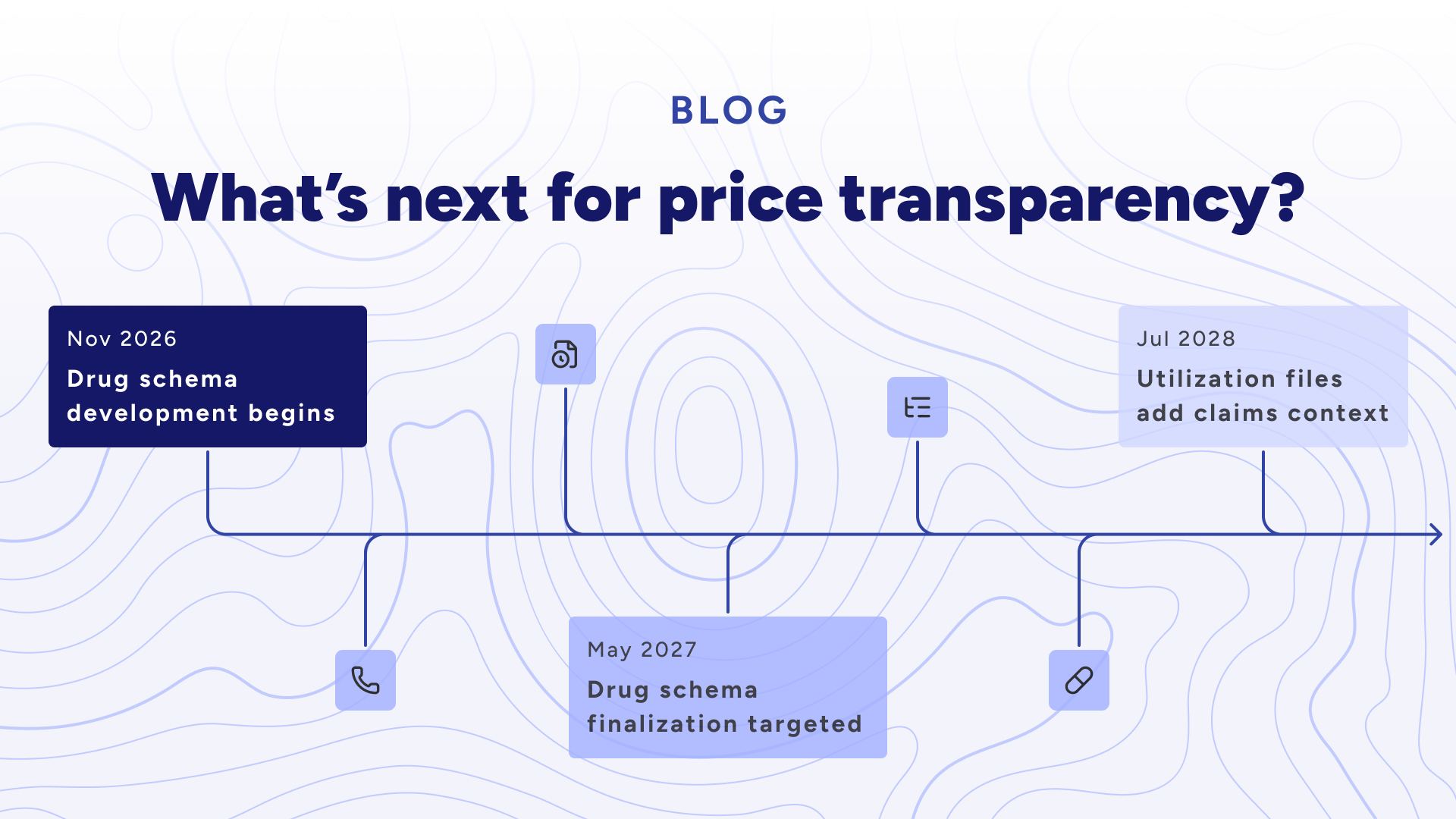
The Centers for Medicare & Medicaid Services (CMS) has delayed enforcement of pharmacy price transparency requirements under the Transparency in Coverage (TiC) rule, as first reported by STAT News. Medical negotiated rate data remains subject to enforcement, but CMS will not require prescription drug machine-readable files until structural and data integrity issues are resolved.
What Was Delayed
CMS is not enforcing requirements related to public disclosure of:
- Negotiated prescription drug rates
- Historical net prices
- Pharmacy benefit data fields rely on inconsistent PBM reporting standards.
The delay applies only to pharmacy transparency, not to medical services.
Why CMS Paused Pharmacy Data
CMS has clearly stated its reasons for pausing enforcement of pharmacy price transparency. There is no consistent, standardized schema for pharmacy benefit data, and PBM contracting structures create significant variability, making comparisons difficult. CMS also noted that early publication could lead to inaccurate or misleading information, and that enforcing requirements without technical clarity would reduce practical value. CMS is prioritizing data quality, consistency, and practical use over premature disclosure.
What Remains Fully Enforced
The delay does not affect:
- Medical negotiated rates for professional and facility services
- In-network and allowed amount disclosures for medical claims
- Ongoing schema refinement and enforcement tied to medical TiC data
For providers, medical transparency remains the most actionable and reliable source of commercial rate information.
How This Affects Payer Strategy
The delay has several indirect effects on payer behavior.
Reduced near-term exposure in pharmacy economics
Payers and PBMs avoid immediate public scrutiny of rebate structures and net pricing, maintaining leverage while CMS addresses standardization challenges.
Increased focus on medical cost containment
With pharmacy data temporarily excluded, payers are focusing more on medical utilization controls, network design, and rate management. Continued emphasis on prior authorization, site-of-care selection, and targeted reimbursement adjustments is expected.
Less transparency, more asymmetry in Rx negotiations
Employers and providers lack standardized pharmacy benchmarks, which reinforces the informational advantage of payers and PBMs in drug pricing discussions.
Clear signal on CMS priorities
CMS emphasizes that transparency depends on usable, comparable data rather than the volume of disclosure. Payers should expect stricter enforcement where standards are established and reliable.
Regulatory and Market Implications
For provider organizations, the key point is that pharmacy transparency is delayed, but medical rate transparency remains in effect and is increasingly enforceable. Payers are already publishing negotiated medical rates, and CMS is strengthening standards for data structure and use. Providers who use medical TiC data now for benchmarking and negotiations will be better positioned as transparency requirements expand.
White Paper
From Transparency to Prediction: Quantifying the Drivers of Physician Reimbursement Variation
This analysis uses Transparency in Coverage data to model how payers behave, not just what they pay. By linking reimbursement rates to physician characteristics, we uncover the patterns behind payment variation and transform transparency data into predictive intelligence. The result: a predictive view of rate dynamics that helps stakeholders anticipate trends and negotiate with data-driven confidence.

White Paper
Q3 2025 State of Commercial Reimbursement: Trek Health’s Quarterly Market Intelligence
Trek Health’s Quarterly Reimbursement Brief highlights emerging variability in commercial payment rates across U.S. payers, specialties, and geographic markets. With some segments experiencing double-digit growth and others notable declines, contracting performance is increasingly shaped by real-time payer behavior rather than historical norms. Through validated reimbursement trend analytics, contract intelligence, and policy monitoring, Trek equips provider organizations to anticipate market shifts, protect revenue, and negotiate with measurable leverage.

White Paper
Q4 2025 State of Commercial Reimbursement: Trek Health’s Quarterly Market Intelligence
Trek Health’s Q4 2025 Quarterly Market Intelligence report analyzes quarter-over-quarter commercial reimbursement movement across national payers, physician specialties, and U.S. states. While overall reimbursement improved following earlier declines, rate changes remained uneven—highlighting payer selectivity, persistent specialty outliers, and shifting geographic leverage. This report moves beyond static benchmarks by tracking real-time reimbursement changes, giving provider organizations actionable insight to identify negotiation risk early, protect rate parity, and respond proactively to evolving payer behavior.

White Paper
Reimbursement and Reality: The Economics of Breast Cancer Treatment
While breast cancer awareness efforts often focus on screening and treatment, one critical factor remains overlooked: how care is reimbursed. Payment structures shape far more than provider margins; they influence access, equity, and patient outcomes.
In this analysis of payer rates, Trek Health uses its Transparency Platform to analyze how reimbursement for breast cancer care varies across geography, commercial payer behavior, and public policy. The findings reveal a system that rewards disease burden rather than prevention which creates inequities that ripple through the entire care process.
Inside you’ll learn:
- How reimbursement rates differ dramatically by state and payer
- Why higher disease burden correlates with higher payment, but prevention does not
- What these trends mean for provider strategy, patient access, and equity
Download the full analysis to see how transparency data can help reshape breast cancer care—turning financial insight into fairer outcomes.

White Paper
The Payer Paradox: When Higher Rates Don’t Mean Higher Reimbursement
This analysis uncovers a critical paradox in commercial healthcare financing: the payers offering the highest contracted rates often deliver the lowest realized reimbursement once denials and administrative friction are accounted for. By introducing the Payer Generosity Index (PGI) and adjusted PGI (aPGI), Trek Health reveals how payer performance varies not only across insurers, but across specialties and service lines. These findings equip healthcare organizations with a clearer, data-driven framework for contracting, revenue optimization, and strategic planning in an increasingly complex reimbursement landscape.

White Paper
The Private Practice Playbook: Rate Negotiation Index Rankings for Specialty-Specific M&A Strategy
Physician economics are shifting as private equity and independent platforms redefine the workforce landscape. Trek Health’s Rate Negotiation Index Report quantifies the return on physician labor across states and specialties in a new lens: combining commercial reimbursement, physician salary, malpractice risk, and provider density into a single metric. This data driven foundation for smarter M&A strategy identifies the most economically sustainable opportunities across the U.S. for physician recruitment and network expansion.

Published on
January 6, 2026
Written by
Ryan Kelly
The Centers for Medicare & Medicaid Services (CMS) has delayed enforcement of pharmacy price transparency requirements under the Transparency in Coverage (TiC) rule, as first reported by STAT News. Medical negotiated rate data remains subject to enforcement, but CMS will not require prescription drug machine-readable files until structural and data integrity issues are resolved.
What Was Delayed
CMS is not enforcing requirements related to public disclosure of:
- Negotiated prescription drug rates
- Historical net prices
- Pharmacy benefit data fields rely on inconsistent PBM reporting standards.
The delay applies only to pharmacy transparency, not to medical services.
Why CMS Paused Pharmacy Data
CMS has clearly stated its reasons for pausing enforcement of pharmacy price transparency. There is no consistent, standardized schema for pharmacy benefit data, and PBM contracting structures create significant variability, making comparisons difficult. CMS also noted that early publication could lead to inaccurate or misleading information, and that enforcing requirements without technical clarity would reduce practical value. CMS is prioritizing data quality, consistency, and practical use over premature disclosure.
What Remains Fully Enforced
The delay does not affect:
- Medical negotiated rates for professional and facility services
- In-network and allowed amount disclosures for medical claims
- Ongoing schema refinement and enforcement tied to medical TiC data
For providers, medical transparency remains the most actionable and reliable source of commercial rate information.
How This Affects Payer Strategy
The delay has several indirect effects on payer behavior.
Reduced near-term exposure in pharmacy economics
Payers and PBMs avoid immediate public scrutiny of rebate structures and net pricing, maintaining leverage while CMS addresses standardization challenges.
Increased focus on medical cost containment
With pharmacy data temporarily excluded, payers are focusing more on medical utilization controls, network design, and rate management. Continued emphasis on prior authorization, site-of-care selection, and targeted reimbursement adjustments is expected.
Less transparency, more asymmetry in Rx negotiations
Employers and providers lack standardized pharmacy benchmarks, which reinforces the informational advantage of payers and PBMs in drug pricing discussions.
Clear signal on CMS priorities
CMS emphasizes that transparency depends on usable, comparable data rather than the volume of disclosure. Payers should expect stricter enforcement where standards are established and reliable.
Regulatory and Market Implications
For provider organizations, the key point is that pharmacy transparency is delayed, but medical rate transparency remains in effect and is increasingly enforceable. Payers are already publishing negotiated medical rates, and CMS is strengthening standards for data structure and use. Providers who use medical TiC data now for benchmarking and negotiations will be better positioned as transparency requirements expand.