Building the Data-Driven Payer Negotiation Tech Stack

Payer negotiations have never been simple, but they have become materially more complex in recent years. Commercial reimbursement is shifting faster, payer policies are changing more often, and negotiation cycles are becoming more compressed. At the same time, provider finance and managed care teams are being asked to defend margins with fewer resources and less tolerance for error.

In this environment, payer negotiations are no longer won by experience alone. They are won by actionable data and intimate familiarity with contracts. Organizations that consistently secure favorable outcomes are those that can quickly assemble clear, defensible data and translate it into a credible negotiation narrative.

Success depends on whether a provider organization has built an integrated, data-driven technology stack that unites market benchmarks, contract terms, and payer policy intelligence in a single operating model.

This article outlines the modern payer negotiation tech stack, how finance leaders should approach each layer, and how Trek Health’s solutions fit with other critical systems to support sustainable negotiation performance.

Why payer negotiations now require a dedicated technology stack

Historically, payer negotiations relied on past contracts, internal reimbursement averages, and anecdotal comparisons. That approach breaks down in today’s market for several reasons.

First, the federal CMS Transparency in Coverage regulation has reshaped the negotiation landscape. By mandating that payers publicly disclose negotiated rates across providers, the rule has introduced unprecedented market visibility, creating both opportunities and risks for organizations that know how to interpret and apply this data effectively.

Second, payer policies now change so quickly that manual tracking is unrealistic and costly. Coverage criteria, authorization rules, and reimbursement methodologies shift continuously, often outside contract amendments, with direct downstream financial impact.

Third, internal data fragmentation remains a major constraint. Contract terms, claims performance, market benchmarks, and policy updates often exist in separate tools across finance, managed care, revenue cycle, and compliance teams.

The result is a negotiation process that becomes reactive instead of strategic. Teams spend more time assembling information than evaluating leverage. Meetings focus on defending assumptions instead of advancing outcomes.

A modern payer negotiation tech stack solves this by creating a shared source of truth and a repeatable negotiation workflow.

The modern payer negotiation tech stack overview

A high-performing payer negotiation tech stack is best understood as a series of connected layers rather than a single tool.

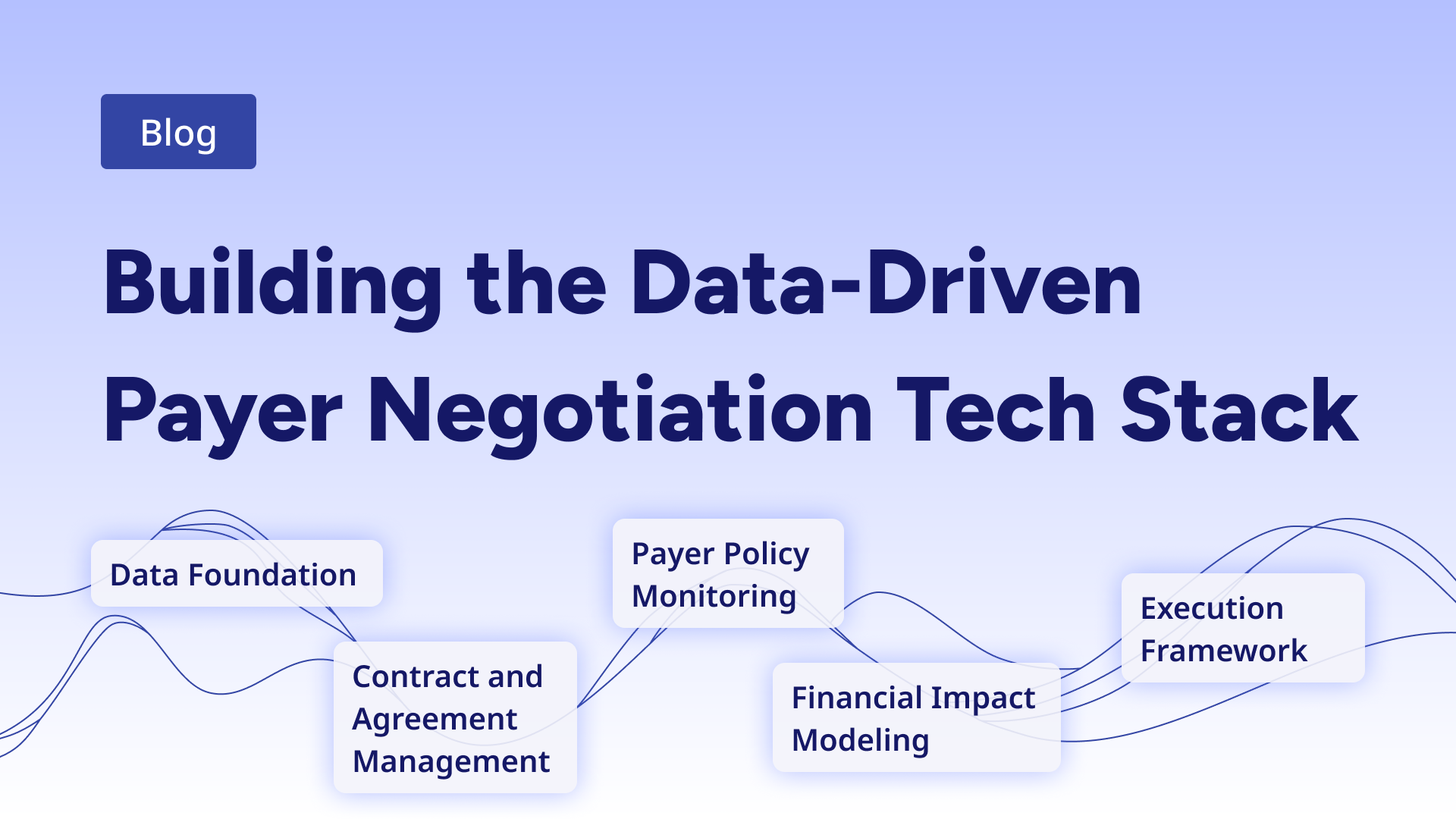
These layers include a data foundation, a contract intelligence system of record, market price intelligence, payer policy intelligence, and a workflow and governance layer that turns insight into execution.

Each layer serves a distinct purpose, but the value is created when they operate together.

Data Foundation: Establishing Negotiation-Ready Evidence

Every payer negotiation depends on data credibility. Finance leaders need confidence that the numbers they bring to the table are accurate, reproducible, and defensible.

This foundation combines internal financial performance data, such as claims, remittances, adjustments, and denials, with validated Transparency in Coverage data normalized at the code, geography, and site-of-care levels. Without this grounding, negotiations quickly devolve into debates over data integrity rather than discussions about value.

Trek Health supports this foundation by delivering provider-focused reimbursement intelligence designed specifically for negotiation use cases, prioritizing clarity and defensibility over raw data volume. Most organizations pair this with an internal data warehouse or BI environment to align market benchmarks with service-line and margin performance.

Contract and Agreement Management as the System of Record

Negotiation leverage erodes when contract terms are unclear, inaccessible, or disconnected from financial performance. Contract Intelligence provides the system of record that anchors payer strategy.

Finance leaders should expect centralized access to agreements, searchable contract terms, renewal timelines, and methodology details. More importantly, contract intelligence must connect language to financial risk, highlighting where terms contribute to underpayment, denials, or administrative burden.

Trek Health’s Contract Intelligence solution combines centralized contract visibility with payer and policy intelligence, enabling teams to assess payer relationships holistically rather than contract by contract. Traditional CLM tools may support document storage, but without an intelligence layer, they remain administrative rather than strategic.

Payer Policy Monitoring and Change Detection

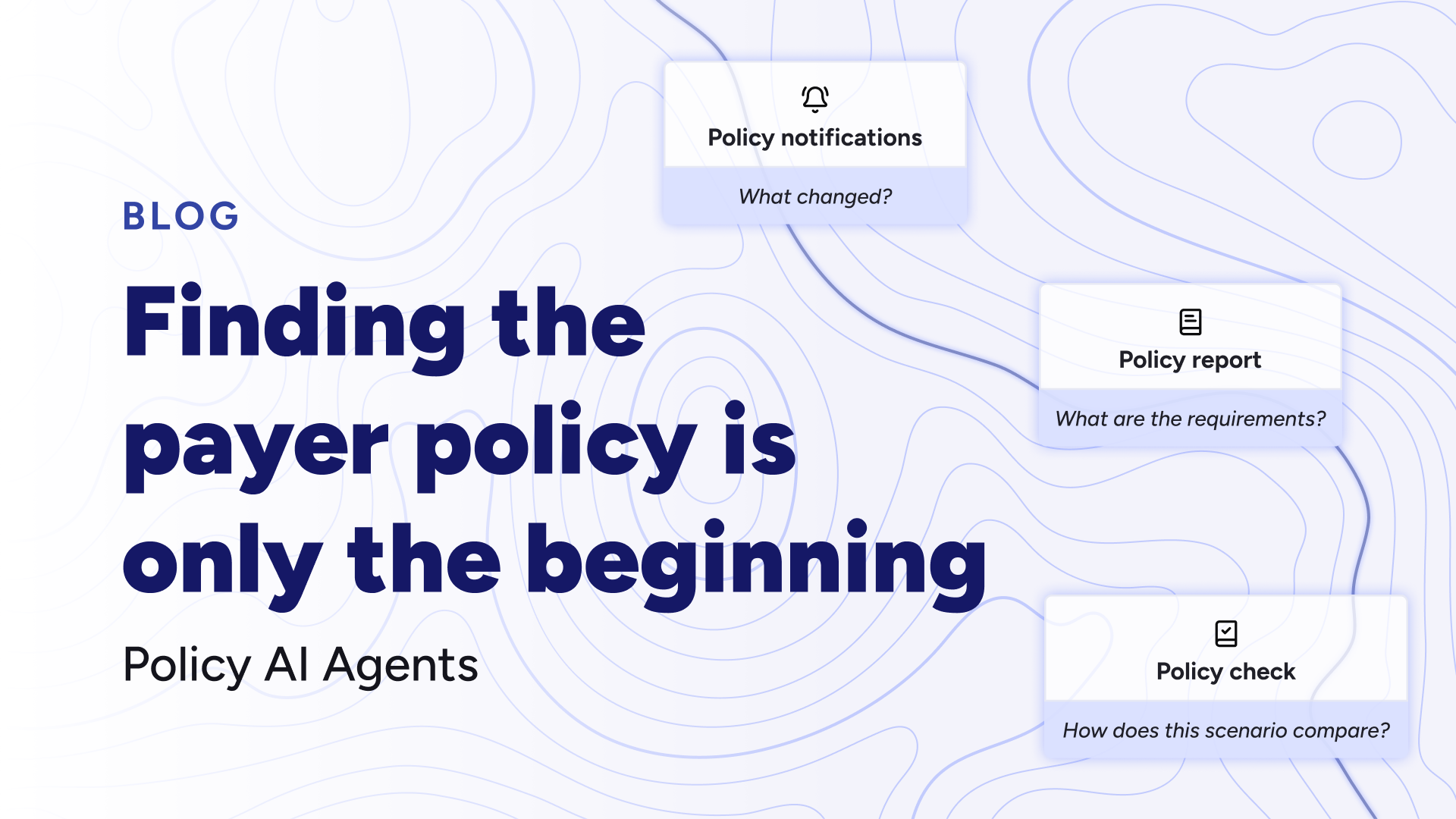
Payer policies are an increasingly important and often overlooked input in negotiations. Policy updates shape coverage decisions, authorization requirements, and reimbursement behavior, often outside of formal contract amendments. Centralized visibility into payer policy changes across fragmented sources enables teams to quickly understand what changed and why it matters.

For finance leaders, this insight helps explain performance shifts, anticipate reimbursement risk, and identify early signals of payer cost-containment strategies. When policy intelligence is combined with utilization management analytics, prior authorization data, and denial trends, organizations can quantify downstream financial impact and strengthen data-backed negotiation narratives.

Financial Impact Modeling and Negotiation Economics

Reliable data only becomes useful when it can be translated into financial outcomes. Finance leaders need the ability to model how proposed rate changes, methodology adjustments, or policy shifts affect revenue, margin, and service-line performance before entering negotiations.

This capability focuses on quantifying upside and risk. It includes modeling rate scenarios by code and payer, estimating revenue recovery from underpayment corrections, and projecting the downstream impact of changes to authorization requirements or coverage criteria. Without this analysis, negotiation positions are often based on high-level targets rather than defensible economics.

When financial modeling is embedded into the negotiation process, teams can prioritize the highest-impact opportunities, align leadership on trade-offs, and enter discussions with clear guardrails. This shifts negotiations from reactive rate requests to disciplined, outcome-driven conversations grounded in enterprise financial strategy.

Execution Framework: Workflow and Governance

Insight alone does not improve negotiation outcomes. Execution does.

This final component focuses on prioritization, accountability, and governance. Finance leaders need a clear view of which payer opportunities matter most, who owns them, and how progress is tracked through renewal cycles.

Many organizations use CRM or workflow tools to manage negotiation pipelines and align stakeholders across finance, managed care, and revenue cycle teams. Executive reporting then translates complex analysis into clear, decision-ready summaries.

The goal is a repeatable operating model that replaces ad hoc negotiations with disciplined, data-driven execution.

A practical implementation roadmap for finance leaders

Modernizing a negotiation stack does not require a multi-year transformation.

In the first 30 days, leaders should focus on establishing data integrity. This includes validating benchmarks for priority service lines, inventorying contracts, and confirming renewal timelines.

Over the next 60 to 90 days, teams can standardize negotiation packages that combine benchmarks, contract context, and modeled financial impact. Policy updates should be routed to clear owners with defined response workflows.

Within six months, organizations can institutionalize governance through regular market reviews, prioritized negotiation backlogs, and executive reporting tied to measurable outcomes.

Negotiation advantage is built, not improvised

The most successful provider organizations treat payer negotiations as an ongoing discipline rather than a periodic event. They invest in systems that reduce uncertainty, accelerate decision making, and strengthen negotiating leverage.

A data-driven payer negotiation tech stack allows finance leaders to shift conversations away from assumptions and toward evidence. In a market defined by volatility and scrutiny, that capability is no longer optional. It is foundational.
Download White Paper

Building the Data-Driven Payer Negotiation Tech Stack

White Paper

From Transparency to Prediction: Quantifying the Drivers of Physician Reimbursement Variation

This analysis uses Transparency in Coverage data to model how payers behave, not just what they pay. By linking reimbursement rates to physician characteristics, we uncover the patterns behind payment variation and transform transparency data into predictive intelligence. The result: a predictive view of rate dynamics that helps stakeholders anticipate trends and negotiate with data-driven confidence.

Download the White Paper

White Paper

Q3 2025 State of Commercial Reimbursement: Trek Health’s Quarterly Market Intelligence

Trek Health’s Quarterly Reimbursement Brief highlights emerging variability in commercial payment rates across U.S. payers, specialties, and geographic markets. With some segments experiencing double-digit growth and others notable declines, contracting performance is increasingly shaped by real-time payer behavior rather than historical norms. Through validated reimbursement trend analytics, contract intelligence, and policy monitoring, Trek equips provider organizations to anticipate market shifts, protect revenue, and negotiate with measurable leverage.

Download the White Paper

White Paper

Q4 2025 State of Commercial Reimbursement: Trek Health’s Quarterly Market Intelligence

Trek Health’s Q4 2025 Quarterly Market Intelligence report analyzes quarter-over-quarter commercial reimbursement movement across national payers, physician specialties, and U.S. states. While overall reimbursement improved following earlier declines, rate changes remained uneven—highlighting payer selectivity, persistent specialty outliers, and shifting geographic leverage. This report moves beyond static benchmarks by tracking real-time reimbursement changes, giving provider organizations actionable insight to identify negotiation risk early, protect rate parity, and respond proactively to evolving payer behavior.

Download the White Paper

White Paper

Reimbursement and Reality: The Economics of Breast Cancer Treatment

While breast cancer awareness efforts often focus on screening and treatment, one critical factor remains overlooked: how care is reimbursed. Payment structures shape far more than provider margins; they influence access, equity, and patient outcomes.

In this analysis of payer rates, Trek Health uses its Transparency Platform to analyze how reimbursement for breast cancer care varies across geography, commercial payer behavior, and public policy. The findings reveal a system that rewards disease burden rather than prevention which creates inequities that ripple through the entire care process.

Inside you’ll learn:

  • How reimbursement rates differ dramatically by state and payer
  • Why higher disease burden correlates with higher payment, but prevention does not
  • What these trends mean for provider strategy, patient access, and equity

Download the full analysis to see how transparency data can help reshape breast cancer care—turning financial insight into fairer outcomes.

Download the White Paper

White Paper

The Payer Paradox: When Higher Rates Don’t Mean Higher Reimbursement

This analysis uncovers a critical paradox in commercial healthcare financing: the payers offering the highest contracted rates often deliver the lowest realized reimbursement once denials and administrative friction are accounted for. By introducing the Payer Generosity Index (PGI) and adjusted PGI (aPGI), Trek Health reveals how payer performance varies not only across insurers, but across specialties and service lines. These findings equip healthcare organizations with a clearer, data-driven framework for contracting, revenue optimization, and strategic planning in an increasingly complex reimbursement landscape.

Download the White Paper

White Paper

The Private Practice Playbook: Rate Negotiation Index Rankings for Specialty-Specific M&A Strategy

Physician economics are shifting as private equity and independent platforms redefine the workforce landscape. Trek Health’s Rate Negotiation Index Report quantifies the return on physician labor across states and specialties in a new lens: combining commercial reimbursement, physician salary, malpractice risk, and provider density into a single metric. This data driven foundation for smarter M&A strategy identifies the most economically sustainable opportunities across the U.S. for physician recruitment and network expansion.

Download the White Paper

Published on

December 30, 2025

Written by

Ryan Kelly

Payer negotiations have never been simple, but they have become materially more complex in recent years. Commercial reimbursement is shifting faster, payer policies are changing more often, and negotiation cycles are becoming more compressed. At the same time, provider finance and managed care teams are being asked to defend margins with fewer resources and less tolerance for error.

In this environment, payer negotiations are no longer won by experience alone. They are won by actionable data and intimate familiarity with contracts. Organizations that consistently secure favorable outcomes are those that can quickly assemble clear, defensible data and translate it into a credible negotiation narrative.

Success depends on whether a provider organization has built an integrated, data-driven technology stack that unites market benchmarks, contract terms, and payer policy intelligence in a single operating model.

This article outlines the modern payer negotiation tech stack, how finance leaders should approach each layer, and how Trek Health’s solutions fit with other critical systems to support sustainable negotiation performance.

Why payer negotiations now require a dedicated technology stack

Historically, payer negotiations relied on past contracts, internal reimbursement averages, and anecdotal comparisons. That approach breaks down in today’s market for several reasons.

First, the federal CMS Transparency in Coverage regulation has reshaped the negotiation landscape. By mandating that payers publicly disclose negotiated rates across providers, the rule has introduced unprecedented market visibility, creating both opportunities and risks for organizations that know how to interpret and apply this data effectively.

Second, payer policies now change so quickly that manual tracking is unrealistic and costly. Coverage criteria, authorization rules, and reimbursement methodologies shift continuously, often outside contract amendments, with direct downstream financial impact.

Third, internal data fragmentation remains a major constraint. Contract terms, claims performance, market benchmarks, and policy updates often exist in separate tools across finance, managed care, revenue cycle, and compliance teams.

The result is a negotiation process that becomes reactive instead of strategic. Teams spend more time assembling information than evaluating leverage. Meetings focus on defending assumptions instead of advancing outcomes.

A modern payer negotiation tech stack solves this by creating a shared source of truth and a repeatable negotiation workflow.

The modern payer negotiation tech stack overview

A high-performing payer negotiation tech stack is best understood as a series of connected layers rather than a single tool.

These layers include a data foundation, a contract intelligence system of record, market price intelligence, payer policy intelligence, and a workflow and governance layer that turns insight into execution.

Each layer serves a distinct purpose, but the value is created when they operate together.

Data Foundation: Establishing Negotiation-Ready Evidence

Every payer negotiation depends on data credibility. Finance leaders need confidence that the numbers they bring to the table are accurate, reproducible, and defensible.

This foundation combines internal financial performance data, such as claims, remittances, adjustments, and denials, with validated Transparency in Coverage data normalized at the code, geography, and site-of-care levels. Without this grounding, negotiations quickly devolve into debates over data integrity rather than discussions about value.

Trek Health supports this foundation by delivering provider-focused reimbursement intelligence designed specifically for negotiation use cases, prioritizing clarity and defensibility over raw data volume. Most organizations pair this with an internal data warehouse or BI environment to align market benchmarks with service-line and margin performance.

Contract and Agreement Management as the System of Record

Negotiation leverage erodes when contract terms are unclear, inaccessible, or disconnected from financial performance. Contract Intelligence provides the system of record that anchors payer strategy.

Finance leaders should expect centralized access to agreements, searchable contract terms, renewal timelines, and methodology details. More importantly, contract intelligence must connect language to financial risk, highlighting where terms contribute to underpayment, denials, or administrative burden.

Trek Health’s Contract Intelligence solution combines centralized contract visibility with payer and policy intelligence, enabling teams to assess payer relationships holistically rather than contract by contract. Traditional CLM tools may support document storage, but without an intelligence layer, they remain administrative rather than strategic.

Payer Policy Monitoring and Change Detection

Payer policies are an increasingly important and often overlooked input in negotiations. Policy updates shape coverage decisions, authorization requirements, and reimbursement behavior, often outside of formal contract amendments. Centralized visibility into payer policy changes across fragmented sources enables teams to quickly understand what changed and why it matters.

For finance leaders, this insight helps explain performance shifts, anticipate reimbursement risk, and identify early signals of payer cost-containment strategies. When policy intelligence is combined with utilization management analytics, prior authorization data, and denial trends, organizations can quantify downstream financial impact and strengthen data-backed negotiation narratives.

Financial Impact Modeling and Negotiation Economics

Reliable data only becomes useful when it can be translated into financial outcomes. Finance leaders need the ability to model how proposed rate changes, methodology adjustments, or policy shifts affect revenue, margin, and service-line performance before entering negotiations.

This capability focuses on quantifying upside and risk. It includes modeling rate scenarios by code and payer, estimating revenue recovery from underpayment corrections, and projecting the downstream impact of changes to authorization requirements or coverage criteria. Without this analysis, negotiation positions are often based on high-level targets rather than defensible economics.

When financial modeling is embedded into the negotiation process, teams can prioritize the highest-impact opportunities, align leadership on trade-offs, and enter discussions with clear guardrails. This shifts negotiations from reactive rate requests to disciplined, outcome-driven conversations grounded in enterprise financial strategy.

Execution Framework: Workflow and Governance

Insight alone does not improve negotiation outcomes. Execution does.

This final component focuses on prioritization, accountability, and governance. Finance leaders need a clear view of which payer opportunities matter most, who owns them, and how progress is tracked through renewal cycles.

Many organizations use CRM or workflow tools to manage negotiation pipelines and align stakeholders across finance, managed care, and revenue cycle teams. Executive reporting then translates complex analysis into clear, decision-ready summaries.

The goal is a repeatable operating model that replaces ad hoc negotiations with disciplined, data-driven execution.

A practical implementation roadmap for finance leaders

Modernizing a negotiation stack does not require a multi-year transformation.

In the first 30 days, leaders should focus on establishing data integrity. This includes validating benchmarks for priority service lines, inventorying contracts, and confirming renewal timelines.

Over the next 60 to 90 days, teams can standardize negotiation packages that combine benchmarks, contract context, and modeled financial impact. Policy updates should be routed to clear owners with defined response workflows.

Within six months, organizations can institutionalize governance through regular market reviews, prioritized negotiation backlogs, and executive reporting tied to measurable outcomes.

Negotiation advantage is built, not improvised

The most successful provider organizations treat payer negotiations as an ongoing discipline rather than a periodic event. They invest in systems that reduce uncertainty, accelerate decision making, and strengthen negotiating leverage.

A data-driven payer negotiation tech stack allows finance leaders to shift conversations away from assumptions and toward evidence. In a market defined by volatility and scrutiny, that capability is no longer optional. It is foundational.