Machine-readable payer files contain millions of rows. The challenge of its current form isn’t access — it's orientation and usability. When a hospital system negotiates with dozens of payers and each payer contract covers hundreds of codes, understanding what's actually in those files becomes its own research project.
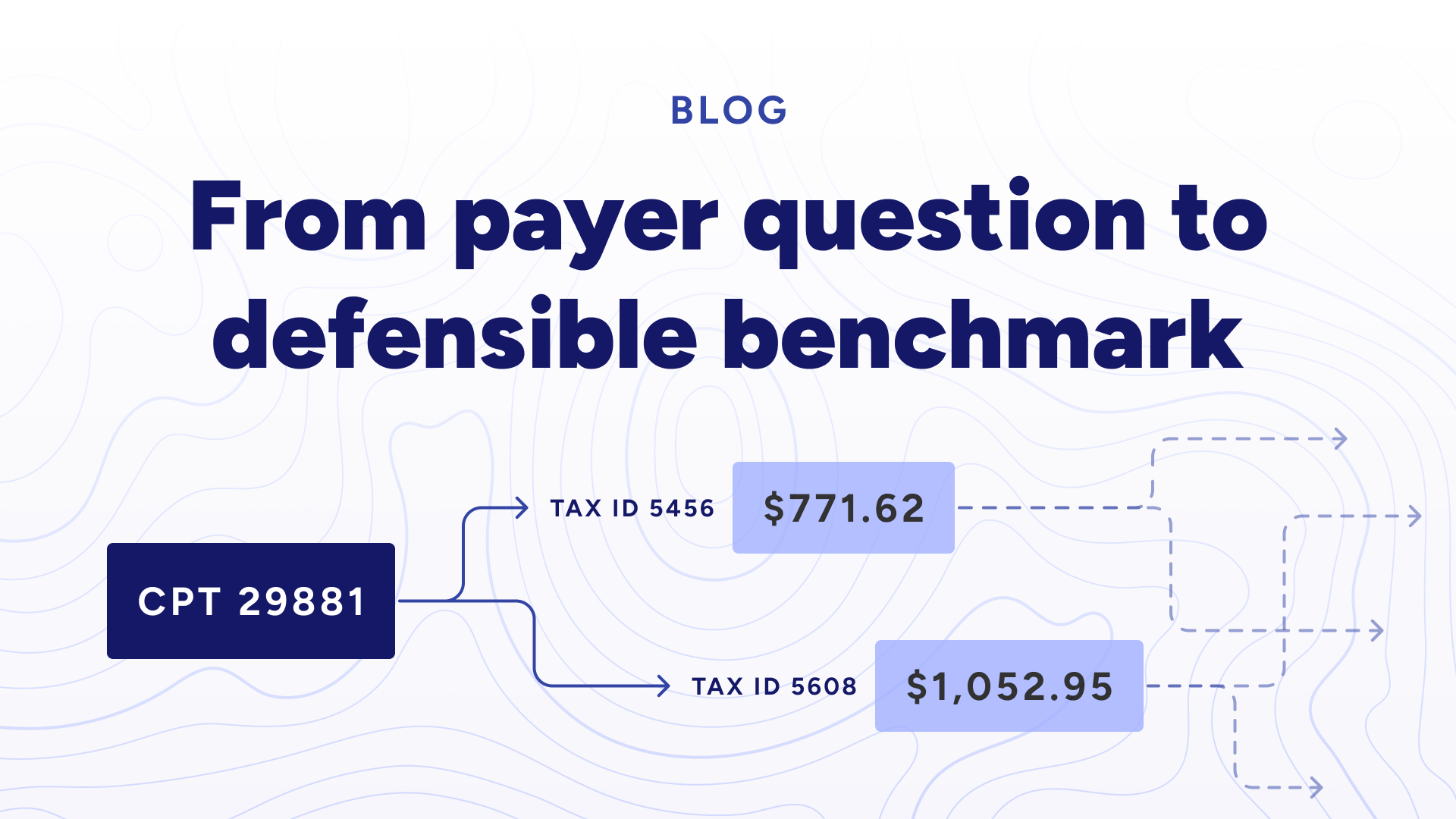
Group Rate Research, a core feature within Trek's Price Intelligence platform, solves that orientation problem. It maps each provider, identified by name, NPI, or TIN, to every payer they're contracted with and every code reimbursed within each of those contracts. The result is a structured, queryable view of contracted rates that mirrors the complexity of the real contracting landscape.Every price transparency vendor can give you some level of reimbursement data; Group Rate Research dives into the structural layer underneath, mapping which providers appear in which payer files, which codes are actually contracted, and where the gaps are.
How It Works
For a given provider entity, Trek surfaces which payers have published rates tied to that NPI or TIN, and within each payer relationship, which billing codes are included. A hospital contracted with seven payers might have 400 codes with Aetna, 310 with BCBS, and 280 with Cigna, and so on. Group Rate Research makes that structure visible and comparable. Because the data pulls directly from payer transparency files, what you see is exactly what the payer published.
Audit & Data Verification
Before any analysis, you need to know what data exists. Group Rate Research is often the first step: confirming that a given provider or facility is represented in a payer's file, identifying which codes are missing or unpopulated, and flagging discrepancies between what a contract covers and what the payer published. This is particularly valuable after a payer file update cycle, where rate changes and omissions can be subtle.
Network Strength Benchmarking
For payers and network strategists, the depth of a contracted relationship matters as much as the rate itself. Group Rate Research surfaces how many codes a given provider has contracted with each payer, enabling network adequacy assessments and identification of coverage gaps. A facility showing strong rates on surgical codes but absent from imaging contracts is a different network asset than one with broad, even coverage.
Due Diligence & M&A Valuation
When evaluating an acquisition or partnership, contracted rate structures are a material input. Group Rate Research accelerates that diligence by providing a fast read on payer mix, code coverage depth, and rate positioning for the target entity — without waiting on counterparty disclosure.
Implementing Group Rate Research in Your Workflow
Group Rate Research works best as a starting point, not a final output. Before benchmarking rates or modeling payer mix, use it to confirm data coverage for the entities you care about, identify which payers have published complete file sets for your target providers, and establish a clean baseline for downstream analysis. The orientation problem is solvable — and once it's solved, everything else moves faster.