How Can a 30-Minute Doctor Visit Cost $101 or $660? The Healthcare Price Transparency Problem

In the same U.S. city, a routine 30-minute office visit was billed at $101 by one health system and $660 by another.

Same CPT code. Same city. Same service.

So what explains a 550% price difference?

The answer lies in a growing challenge for hospitals and health systems: lack of visibility into payer reimbursement rates.


Why Health Systems Must Prioritize Payer Rate Benchmarking

Many hospitals have little to no insight into how much payers are reimbursing competitors for the same services. Without proper payer rate benchmarking, health systems are operating with blind spots, leaving significant revenue on the table.

Common challenges include:

  • No access to external reimbursement benchmarks

  • Limited analysis of local payer-negotiated rates

  • Inability to identify underperforming service lines

  • Minimal use of Transparency in Coverage (TiC) data

This is a critical issue in a value-driven market. Without proper healthcare price transparency, hospitals can’t effectively negotiate, optimize, or grow.

Trek Health: Turning Compliance Data Into Competitive Strategy

At Trek Health, we work exclusively with health systems, not payers, to help them unlock the full strategic value of TiC data.

Using our proprietary tools, we turn massive, messy data sets into powerful insights that help hospitals:

  • Identify where they’re underpaid compared to local competitors

  • Benchmark their reimbursement rates by CPT or DRG code

  • Visualize performance with interactive service line heat maps

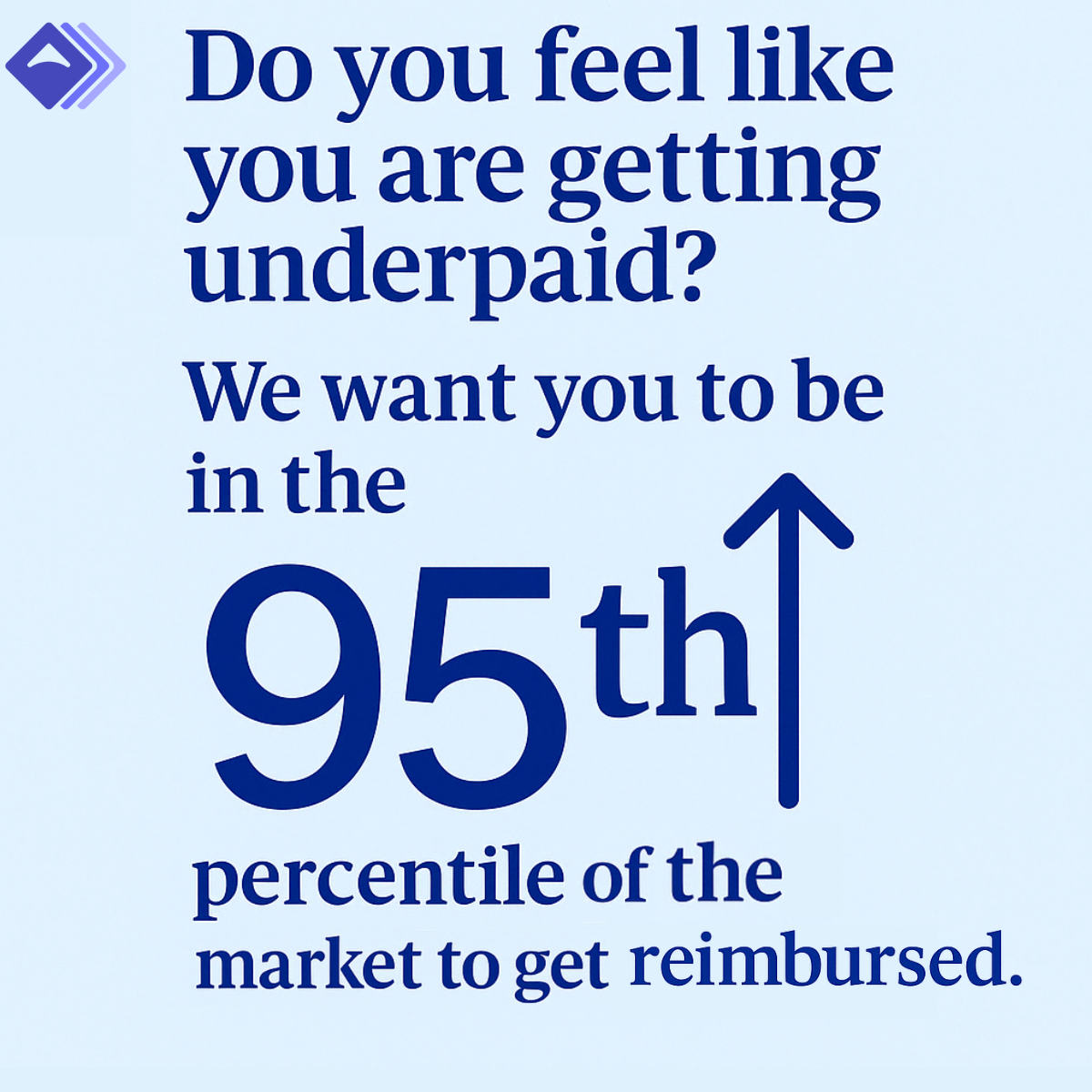
  • Target the 95th percentile of the market for optimal reimbursement

And most importantly: we never share your data with payers. Our allegiance is 100% with provider organizations.

From Transparency in Coverage Compliance to Financial Opportunity

CMS regulations around price transparency were intended to empower providers and patients with greater visibility. But publishing machine-readable files isn’t enough.

The real opportunity comes from analyzing those files—across payers, markets, and service lines and turning them into a roadmap for stronger revenue performance.

Hospitals that treat TiC data as a strategic asset rather than a compliance burden are outperforming their peers in payer negotiations.

Do You Know Where You Stand?

If your health system isn’t benchmarking against the market, you're likely underpaid and unaware of it.

Let Trek Health help you:

  • Close reimbursement gaps

  • Strengthen your payer strategy

  • Get paid what you deserve for the care you deliver

Schedule a strategy call today to see how your rates compare and how to fix them.
Download White Paper

How Can a 30-Minute Doctor Visit Cost $101 or $660? The Healthcare Price Transparency Problem

White Paper

From Transparency to Prediction: Quantifying the Drivers of Physician Reimbursement Variation

This analysis uses Transparency in Coverage data to model how payers behave, not just what they pay. By linking reimbursement rates to physician characteristics, we uncover the patterns behind payment variation and transform transparency data into predictive intelligence. The result: a predictive view of rate dynamics that helps stakeholders anticipate trends and negotiate with data-driven confidence.

Download the White Paper

White Paper

Q3 2025 State of Commercial Reimbursement: Trek Health’s Quarterly Market Intelligence

Trek Health’s Quarterly Reimbursement Brief highlights emerging variability in commercial payment rates across U.S. payers, specialties, and geographic markets. With some segments experiencing double-digit growth and others notable declines, contracting performance is increasingly shaped by real-time payer behavior rather than historical norms. Through validated reimbursement trend analytics, contract intelligence, and policy monitoring, Trek equips provider organizations to anticipate market shifts, protect revenue, and negotiate with measurable leverage.

Download the White Paper

White Paper

Reimbursement and Reality: The Economics of Breast Cancer Treatment

While breast cancer awareness efforts often focus on screening and treatment, one critical factor remains overlooked: how care is reimbursed. Payment structures shape far more than provider margins; they influence access, equity, and patient outcomes.

In this analysis of payer rates, Trek Health uses its Transparency Platform to analyze how reimbursement for breast cancer care varies across geography, commercial payer behavior, and public policy. The findings reveal a system that rewards disease burden rather than prevention which creates inequities that ripple through the entire care process.

Inside you’ll learn:

  • How reimbursement rates differ dramatically by state and payer
  • Why higher disease burden correlates with higher payment, but prevention does not
  • What these trends mean for provider strategy, patient access, and equity

Download the full analysis to see how transparency data can help reshape breast cancer care—turning financial insight into fairer outcomes.

Download the White Paper

White Paper

The Private Practice Playbook: Rate Negotiation Index Rankings for Specialty-Specific M&A Strategy

Physician economics are shifting as private equity and independent platforms redefine the workforce landscape. Trek Health’s Rate Negotiation Index Report quantifies the return on physician labor across states and specialties in a new lens: combining commercial reimbursement, physician salary, malpractice risk, and provider density into a single metric. This data driven foundation for smarter M&A strategy identifies the most economically sustainable opportunities across the U.S. for physician recruitment and network expansion.

Download the White Paper

In the same U.S. city, a routine 30-minute office visit was billed at $101 by one health system and $660 by another.

Same CPT code. Same city. Same service.

So what explains a 550% price difference?

The answer lies in a growing challenge for hospitals and health systems: lack of visibility into payer reimbursement rates.


Why Health Systems Must Prioritize Payer Rate Benchmarking

Many hospitals have little to no insight into how much payers are reimbursing competitors for the same services. Without proper payer rate benchmarking, health systems are operating with blind spots, leaving significant revenue on the table.

Common challenges include:

  • No access to external reimbursement benchmarks

  • Limited analysis of local payer-negotiated rates

  • Inability to identify underperforming service lines

  • Minimal use of Transparency in Coverage (TiC) data

This is a critical issue in a value-driven market. Without proper healthcare price transparency, hospitals can’t effectively negotiate, optimize, or grow.

Trek Health: Turning Compliance Data Into Competitive Strategy

At Trek Health, we work exclusively with health systems, not payers, to help them unlock the full strategic value of TiC data.

Using our proprietary tools, we turn massive, messy data sets into powerful insights that help hospitals:

  • Identify where they’re underpaid compared to local competitors

  • Benchmark their reimbursement rates by CPT or DRG code

  • Visualize performance with interactive service line heat maps

  • Target the 95th percentile of the market for optimal reimbursement

And most importantly: we never share your data with payers. Our allegiance is 100% with provider organizations.


From Transparency in Coverage Compliance to Financial Opportunity

CMS regulations around price transparency were intended to empower providers and patients with greater visibility. But publishing machine-readable files isn’t enough.

The real opportunity comes from analyzing those files—across payers, markets, and service lines and turning them into a roadmap for stronger revenue performance.

Hospitals that treat TiC data as a strategic asset rather than a compliance burden are outperforming their peers in payer negotiations.

Do You Know Where You Stand?

If your health system isn’t benchmarking against the market, you're likely underpaid and unaware of it.

Let Trek Health help you:

  • Close reimbursement gaps

  • Strengthen your payer strategy

  • Get paid what you deserve for the care you deliver

Schedule a strategy call today to see how your rates compare and how to fix them.